Powder Metallurgy Applications for Precision Mechanical Parts
Powder metallurgy is widely used to manufacture precision metal components for automotive, motorcycle, industrial machinery, power tools, EV systems, and automation equipment. Yeh Sheng produces custom Sintered Products including shock absorber components, oil pump rotors, gears, bushings, sprockets, and structural parts for OEM applications. We leverage our advanced Manufacturing Capabilities and streamlined Service Workflow to deliver high-quality, cost-effective solutions.
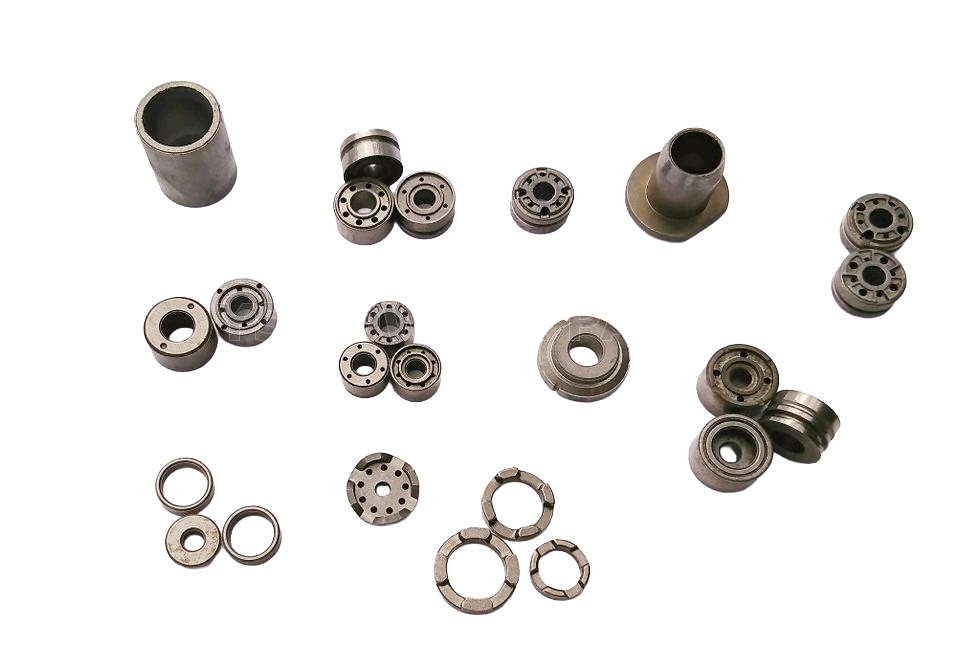
Powder metallurgy is widely used in automotive and motorcycle systems where dimensional consistency, wear resistance, and cost-effective production are required. Yeh Sheng manufactures sintered components for suspension, transmission, oil pump, and engine-related applications.
Key Applications
Shock absorber components, oil pump rotors, timing sprockets, transmission parts, ABS sensor rings, and structural PM components.
Advantages
High material utilization, stable dimensional control, good wear resistance, and suitability for medium to high-volume production.
Related PM Parts
Sintered shock absorber parts, oil pump gears and rotors, sprockets, bushings, and custom automotive PM parts.
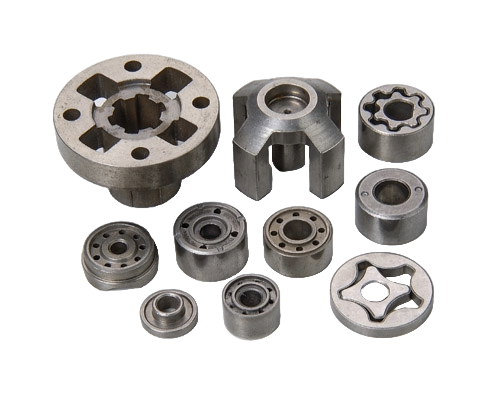
Industrial machinery requires durable metal components that can withstand continuous operation, friction, and mechanical load. Powder metallurgy provides a reliable solution for gears, bushings, cams, and structural parts used in automation and production equipment.
Key Applications
Conveyor system gears, hydraulic pump parts, textile machinery components, bushings, couplings, and mechanical drive parts.
Advantages
Good wear resistance, repeatable production quality, reduced machining waste, and stable performance in industrial environments.
Related PM Parts
Sintered gears, bushings, cams, flanges, couplings, and custom machinery components.
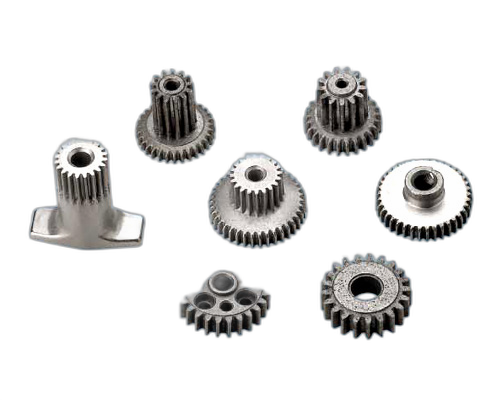
Robotics and automation systems require compact, precise, and reliable mechanical parts. Powder metallurgy is suitable for producing small gears, structural components, and motion-related parts used in robotic arms, actuators, and automated equipment.
Key Applications
Robot arm components, actuator parts, small precision gears, motion control components, and automation system parts.
Advantages
Stable dimensions, compact part design, material efficiency, and suitability for customized mechanical components.
Related PM Parts
PM gears, structural parts, bushings, spacers, sleeves, and custom sintered components for automation equipment.
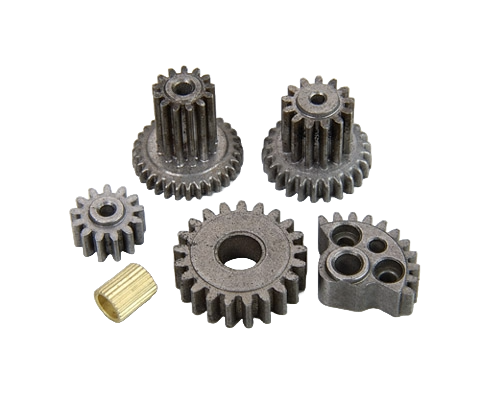
Power tools require compact, high-strength components that can handle torque, impact, and repeated use. Powder metallurgy is commonly used for internal drive parts and wear-resistant mechanical components in handheld tools.
Key Applications
Planetary gear systems, drill chuck components, impact blocks, gearbox parts, and tool transmission components.
Advantages
High strength, good wear resistance, efficient mass production, and the ability to form complex geometries with reduced machining.
Related PM Parts
Sintered gears, tool drive components, impact parts, bushings, and custom PM power tool parts.
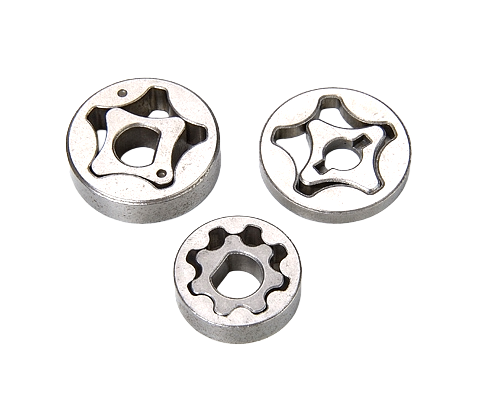
Electric vehicles and green energy systems require efficient, durable, and lightweight metal components. Powder metallurgy can support motor-related parts, magnetic components, and mechanical parts used in EV and renewable energy applications.
Key Applications
Motor components, inner & outer rotors, soft magnetic components, precision drive components, and electrification systems.
Advantages
Material efficiency, design flexibility, stable production quality, and suitability for precision components in energy-related systems.
Related PM Parts
Inner rotors, outer rotors, soft magnetic components, structural PM parts, and precision drive components.
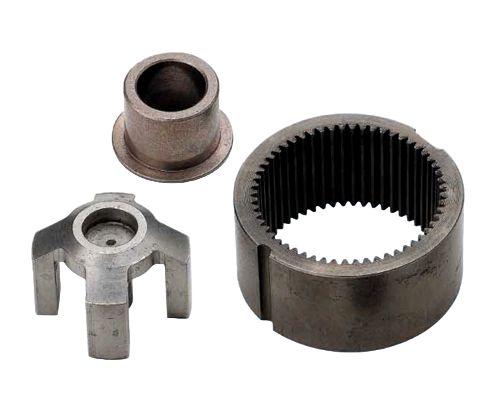
Powder metallurgy is suitable for producing small, complex, and repeatable metal components used in hardware, mechanical assemblies, and precision systems. It is especially useful when parts require consistent dimensions and reduced secondary machining.
Key Applications
Lock components, hinges, small mechanical parts, sleeves, spacers, connectors, and precision structural components.
Advantages
Net-shape manufacturing, consistent quality, reduced material waste, and cost-effective production for repeated part designs.
Related PM Parts
Sleeves, spacers, small gears, bushings, structural parts, and custom sintered metal components.
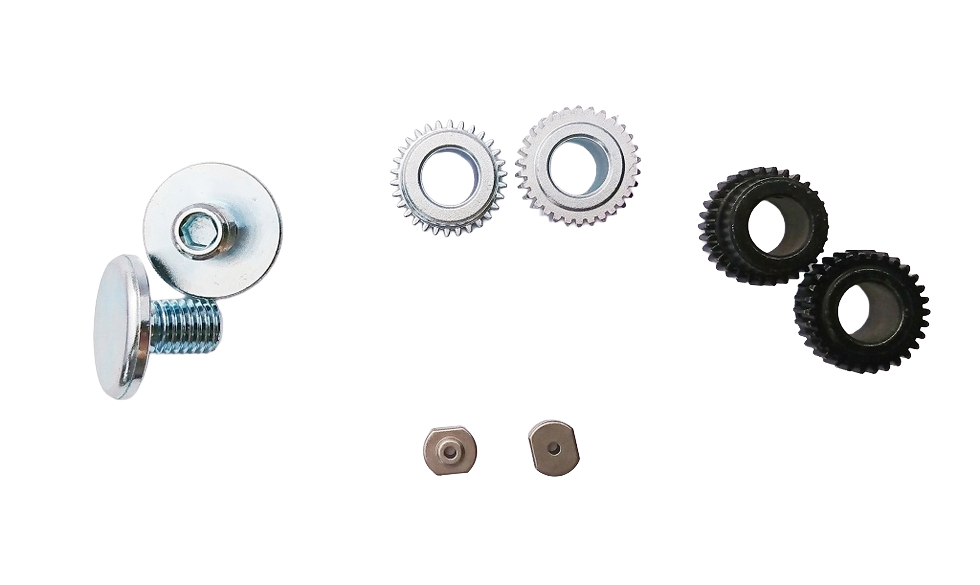
Powder metallurgy provides high-precision, corrosion-resistant, and high-purity metal components for medical equipment, surgical instruments, and diagnostic devices.
Key Applications
Surgical instrument components, medical equipment brackets, fluid pump parts, biocompatible grippers, and structural components.
Advantages
High dimensional precision, superior surface finish, compatibility with stainless steel alloys, and excellent repeatability.
Related PM Parts
Stainless steel PM parts, micro gears, brackets, housing components, and custom medical sintered parts.
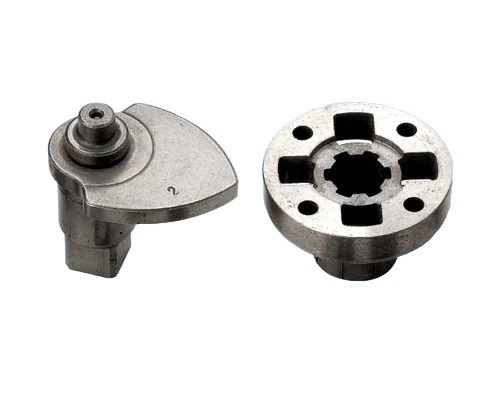
Security systems and lock mechanisms require high-strength, wear-resistant, and complex metal components. Powder metallurgy enables cost-effective mass production of lock cylinders, deadbolts, and latching mechanisms.
Key Applications
Door lock deadbolts, cylinder lock cores, security latches, smart lock components, and anti-theft hardware mechanisms.
Advantages
Exceptional wear resistance, precise fitting for intricate locking geometries, high strength via heat-treated sintered alloys.
Related PM Parts
Sintered lock latches, cylinder cores, security cams, guide rings, and custom lock hardware parts.
Custom Powder Metallurgy Parts for OEM Applications
Yeh Sheng works with OEM customers to manufacture custom powder metallurgy parts based on drawings, samples, and application requirements. Our process supports iron-based, stainless steel, copper-based, and soft magnetic materials, with secondary operations such as sizing, machining, heat treatment, surface treatment, and inspection.
Please contact us if you are looking for sintered metal parts for automotive, industrial machinery, robotics, power tools, EV systems, or precision mechanical applications.
Typical Powder Metallurgy Parts We Manufacture
- • Sintered Gears
- • Oil Pump Rotors
- • Shock Absorber Components
- • Bushings
- • Sprockets
- • Structural Parts
- • Soft Magnetic Components
- • Custom Powder Metallurgy Parts